Comment juger moteur défaut avec pince ampèremètre
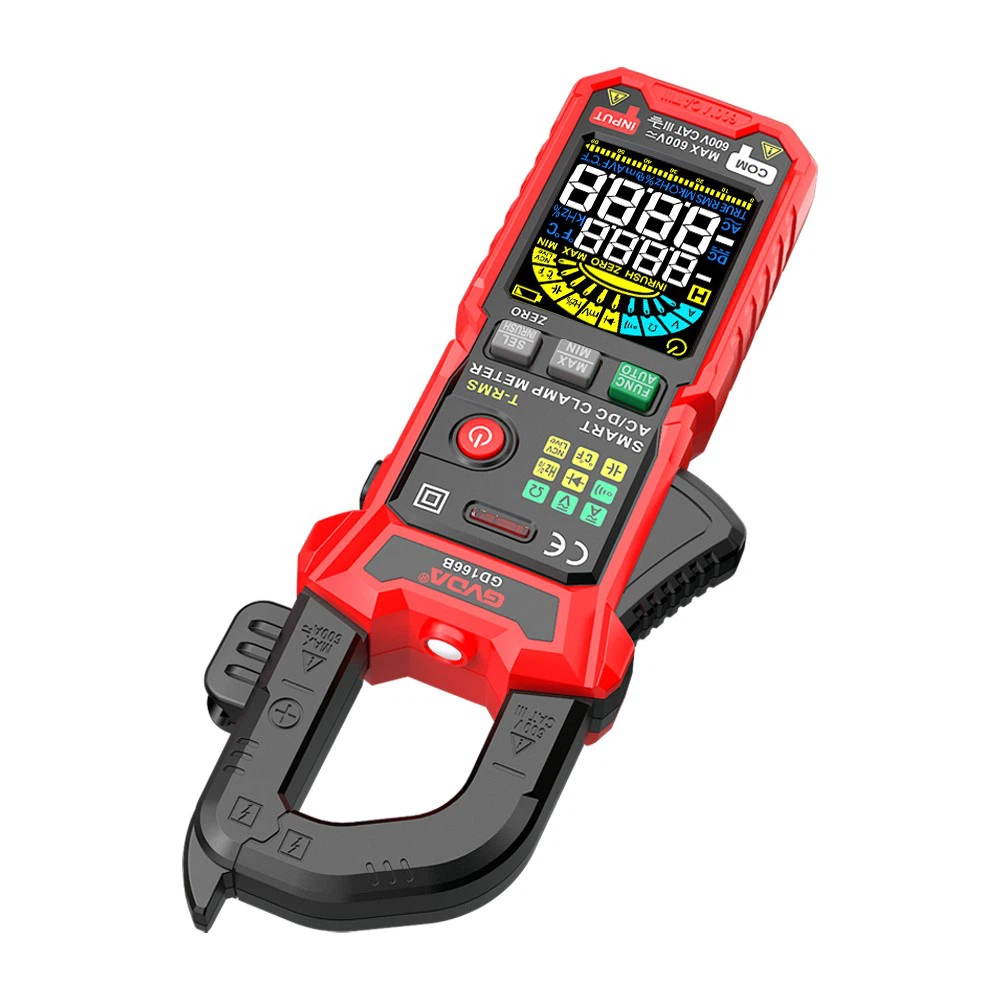
When the motor is obstructed during work inspection, it is usually checked with a measuring pen or multimeter. The author introduces several examples of using clamp Ammeter to measure no-load current of three-phase asynchronous motor to find out the main points of obstruction.
Exemple 1: A minerai concasseur avec a conduite moteur de 15kW. Après le moteur est révisé, it fonctionne normalement sans charge, mais ne peut pas porter la charge. As bientôt comme la charge est ajouté, le moteur volonté surcharge et trip. Après vérification, la machine et alimentation sont normales. Le DC résistance du moteur bobine est 2.4, 3.2 et 2.4 4 respectivement. Le triphasé sans charge courant mesuré par la pince Ampère is 9A, 5A et 8.8A respectivement. It can be sure that the motor coil is obstrued. Remove the motor end cover and discover that one of the wire ends of the one phase winding has been des des, resulting in melting of the soldering tin. The motor is double wound, with one disconnected and the other still connected, resulting in low torque and can only rotate without load, but cannot porter le charger.
Example 2: There is a motor with a rated power of 13kW. After the coil is rewound and tested, the motor rotates normally when running at no load. After being loaded, the motor rotates slowly or even does not rotate. The measured power supply voltage and resistance of each phase are normal, and the three-phase no-load current is basically balanced when measured with a clamp meter, but the current values are relatively small. Therefore, it is concluded that the winding is connected incorrectly. The invention of opening the end cover was originally based on the △ connection method, but the motor was mistakenly connected to the Y connection method, resulting in a smaller normal operating torque and inability to carry a moving load. As the torque of the Y connection method is one-third of that of the △ connection method.
Example 3: A certain machine tool uses a 4kW motor. When the power is turned on, the motor does not rotate but makes a buzzing sound. Dismantle the motor wire, measure that there is electricity on the power supply side, the three-phase voltage is normal, the winding DC resistance is also balanced, the insulation is qualified, and the machine rotates flexibly. Then use a clamp Ammeter on the motor lead at the lower side of the switch to measure the no-load current. The effect is that two phases have current and one phase has no current. Clarify that the wire is obstructed inside the conduit. Pulling out the wire inside the steel pipe, it was discovered that a section of the wire had fundamentally broken, facing towards each other like two needle tips, with white oxide powder at the end of the wire. This is due to the excessive tension during the threading process, resulting in the wire being stretched and stretched, and the electric current being heated and oxidized at the seemingly unbroken point during permanent operation. At this point, voltage can still be measured on the wire head, but current cannot be passed through.