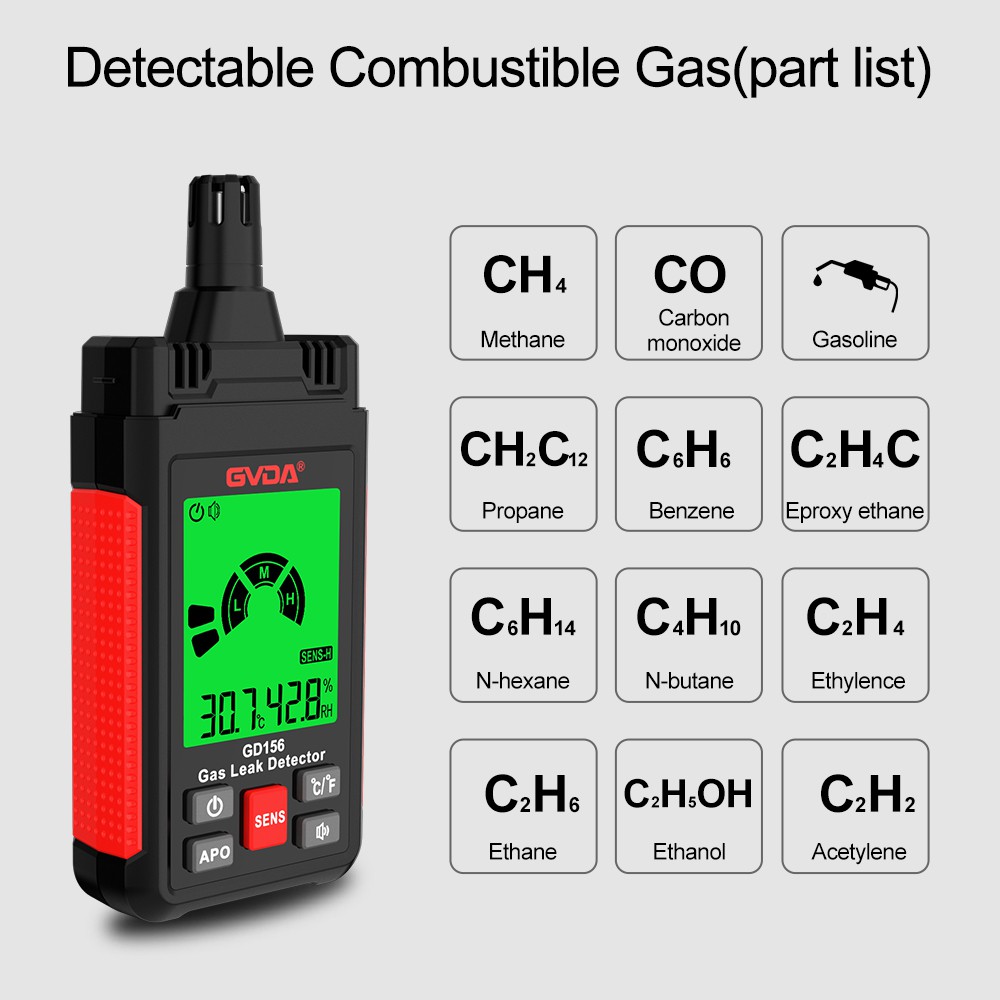
En réalité, beaucoup des gaz rencontrés dans termes de sécurité et hygiène sont mélanges de gaz_organiques et inorganiques. Due to diverses reasons, our current understanding of toxic and nocif gaz is more focused on combustible gases, gases that can cause acute poisoning (hydrogène sulfure, hydrogène cyanure, etc. ), et certains courants toxiques gaz (carbone monoxyde), Oxygène et autres détecteurs, donc, this article will first focus on introducing such detectors, and make suggestions for the application of divers toxic and nocif (inorganic/organic) gas detectors based on the current situation.
Le classification des toxiques et nocifs gaz détecteurs et les clés composants des dels durs d’origine détecteurs de gaz sont gaz capteurs.
Gas capteurs peuvent être divisés en trois catégories dans principe:
A) Gaz capteurs utilisation physiques et chimiques propriétés: tel comme semi-conducteur type (surface contrôle type, volume contrôle type, surface potentiel type), catalytique combustion type, solide thermique conductivité type, etc.
B) gaz capteurs utilisation physiques propriétés: tel as chaleur conduction, lumière interférence, infrarouge absorption, etc.
C) gaz capteurs utilisation électrochimique propriétés: tel as constant potentiel électrolyse, galvanique batterie, diaphragme ion électrode, fixe électrolyte, etc.
En accord aux dangers, nous diviser toxique et nocif gaz en deux catégories: gaz inflammables et toxiques gaz.
Due to leurs propriétés différentes et dangers, leur détection méthodes sont aussi différentes.
The shaded part is shown in in the above right image. No explosion will happen when the flammable gas concentration is below the LEL (Lower Explosive Limit) (inadéquat inflammable gaz concentration) and above the UEL (Upper Explosive Limit) (inadéquat oxygène). The LEL and UEL of different combustible gases are different (voir the introduction of the eighth issue), which should be paid attention to when calibrage the instrument. pour le saké de sécurité, généralement nous devrions émettre une alarme quand la concentration de combustible gaz est 10 pour cent et 20 % de LEL, ici, 10 percent LEL moyens. As a avertissement alarme, et 20 % LEL as a hazard alarm. This is why we call we call detector also known as the LEL detector.
It should be noted that the 100 percent displayed on the LEL detector does not mean that the concentration of the combustible gas reaches 100 percent of the gas volume, but reaches 100 percent of the LEL, which is equivalent to the lowest explosion limit of the combustible gas. If it is methane, 100 percent percent LEL=4 percent volume concentration (VOL). In the work, the detector that measures these gases by LEL is our common catalytic combustion detector. Its principle is a two-way bridge (commonly known as Wheatstone bridge) detection unit. One of the platinum wire bridges is coated with catalytic combustion substances. No matter what kind of flammable gas, as long as it can be ignited by the electrodes, the resistance of the platinum wire bridge will change due to temperature changes. The concentration of combustible gas is in a certain proportion, and the concentration of combustible gas can be calculated through the circuit system and microprocessor of the instrument. Thermal conductivity VOL detectors that directly measure the volume concentration of combustible gases are also available on the market. At the same time, there are already LEL/VOL combined detectors. The VOL flammability detector is especially suited for measuring volumetric (VOL) concentrations of flammable gases in anoxic (insufficient oxygen) environments.
Toxique gaz can exist not only in the production raw materials, such as most organic chemical substances (VOC), but also in the by-products of divers links in the production process, tel as ammonia, carbon monoxide, hydrogène sulfure, etc. Ils sont les les plus grands dangers pour travailleurs. This kind of harm includes not only immediate harm, tel as physical discomfort, disease, death, etc., but also long-term harm to the human body, such as disability, cancer and so on. The detection of these toxic and harmful gases is a problem that our developing countries should start to pay full attention to.